Abstract:
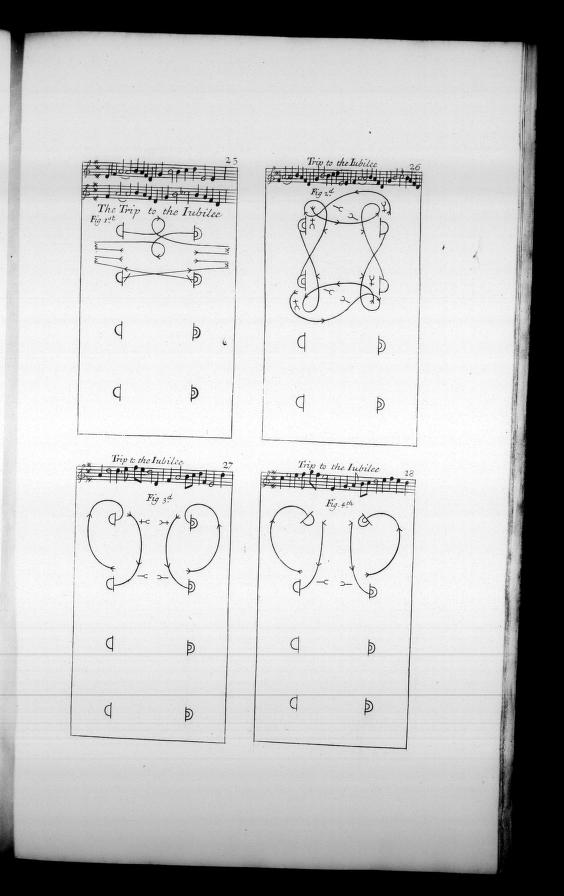
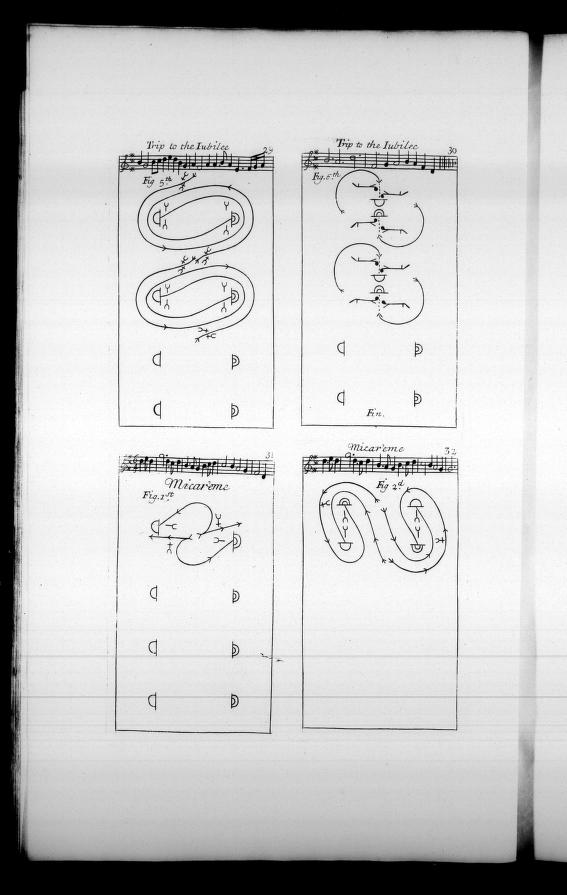
This essay proposes that the 18th Century dance notations of The Trip to the Jubilee (Jubilee) within John Essex’ “For the Further Development of Dancing: A Treatise of Chorography” not only convey a series of dancing steps but also index ideologies of feeling1 . Since choreography notation conflates text with body, becoming a body of text comprised of a text of bodies, it becomes essential to treat Jubilee not only as a hybrid of text and image, but also as a skin. I employ Anzieu’s concept of the Skin-ego to analyse how the piece operates as a skin that maintains a social psyche. In examining this effect, I have drawn on Sarah Ahmed’s conceptualisation of feeling as forming the surfaces of bodies, Randy Martin’s “kinetic effects”, and Susan Foster’s work in excavating the ideological context from which ballet notation systems emerge and were first used3 . This essay is interactive, with a series of punctuating dance breaks to encourage embodiment through the exploration of each section. Technical analysis of the choreography highlights the production of kinaesthetic feelings, and the processes through which these feelings extend experience beyond the limitations of the individual and instead look to the dancing group. These feelings develop into a network of shared kinetic feeling, that is mediated by the choreography. The assertion of sex differentiation is found to restrict contact between the dancers to construct hererosexual narratives. The presumption of fundamental steps creates somatic hierarchies through sculpting identifiable characteristics of White nobility and ignoring the techniques found in dance styles other than ballet. Finally, the emphasis on geometric patterns traces a lineage between the dancers of ballet and the dancers of balletto. Dancing with others offers the opportunity to redraw corporeal lines and become part of a kinetic network of feeling; this new delineating surface is shaped by the context within which ballet was facilitated to circulate for White nobility across the country and the colonies.
Introduction
Capturing dance performance is uniquely complex because dance unfolds with time, like music, but also in space, like sculpture. Notating dance is an effort to translate this spatial-temporal art form onto paper, in a fixed state. Consequently, a notation system contains elements which fall short in their representation of dance alongside elements that are better captured; these points of emphasis betray cultural feelings that circulate the piece. I therefore propose that the notations of The Trip to the Jubilee (Jubilee) within John Essex’ “For the Further Development of Dancing: A Treatise of Chorography” not only convey a series of dancing steps but also index ideologies of feeling1 . I use the word feeling in this essay, because it encompasses physical sensation, emotion, and the process of feeling for: of locating, with mental tactility, proprioceptive sensation and spatial memory. These types of feeling are enacted through dance and cannot occur in complete distinction from each other. Since choreography notation conflates text with body, becoming a body of text comprised of a text of bodies, it becomes essential to treat Jubilee not only as a hybrid of text and image, but also as a skin. I employ Anzieu’s concept of the Skin-ego to analyse how the piece operates as a skin that maintains a social psyche through assertion of sex differentiation, fundamental steps, and geometric patterns2 . This social psyche limits the sensations created while dancing with others, sensations which redraw delineating surfaces of the body, so that Jubilee can present an embodied identity of white nobility. In examining this effect, I have drawn on Sarah Ahmed’s conceptualisation of feeling as forming the surfaces of bodies, Randy Martin’s “kinetic effects”, and Susan Foster’s work in excavating the ideological context from which ballet notation systems emerge and were first used3 . I believe that reading about dance limits understanding of dance without also dancing about dance. This piece is punctuated with seven dance breaks that I encourage you to experiment with however you can navigate dance in this moment.
Ballet contains an internal interest in its own history: of tracing a lineage through history to the present moment. The history of ballet has been articulated in detail, but here will benarrowed to present the context within which Essex published Jubilee. Court dances in the 16th century largely consisted of promenading through elaborate floor patterns, with stylised carriage of the arms, and small jumps and turns that befitted their restrictive dress5 . This style emanated from Italian nobility and was called balletto, from the Latin ballare ‘to dance6 ’.
A glimpse of balletto is employed in the Royal Ballet’s MacMillan choreography of Romeo and Juliet, as the Capulet family enter their masquerade ball for the Dance of the Knights. The historical setting of this adaptation provides a useful reference point of the precursor to ballet. I recommend watching this piece before continuing- not for ‘perfect’ historical accuracy but for an image of genre. Balletto was brought to France through the marriage of Catherine de Medici to the French King Henry II, where it was championed as ballet8 . During the reign of King Louis XXIV in the late 17th century, ballet flourished dramatically into the extensive repertoire of steps that remain today9 . This shift in the complexity of ballet instigated the King’s desire for a notation system, which was provided by Pierre Beauchamps, his personal dance instructor10 . Raoul Auger Feuillet then published this notation system, “Chorégraphie, ou l'art de décrire la danse” cementing the French terminology of ballet that binds global ballet practice today11 . In the early 18th century however, French notation was entirely translated to English. John Essex was a dancer and dance writer who was among the first to translate Feuillet’s Chorégraphie into English, when in 1706 he published his Treatise of Chorography. Jubilee is the first dance of several notated by John Essex in his second edition of this book “For the Further Improvement of Dancing: A Treatise of Chorography”, containing his translation of Feuillet, followed by an extended series of English country dances, with one “new” French dance, each “composed and writt” by Essex13 .
The Destabilisation of Corporeal Lines Through Kinetic Effects
The process of choreographed dancing with others produces unique sensations, as one’s body becomes a moving trace among other moving traces. The choreography of Jubilee produces, and then limits, channels of feeling between the dancers.
Movement and feeling are inextricably linked. Ahmed draws attention to this as she reminds us of the etymology of the word “emotion” as being derivative of the Greek “to move, to move out15 .” Held in this word is an overlap between feeling, movement, and direction. Ahmed continues, “movement does not cut the body off from the ‘where’ of its inhabitance, but connects bodies to other bodies: attachment takes place through movement, through being moved by the proximity of others16 .” In Dance as Social Movement, Randy Martin depicts a change of function occurring through his body while he begins to dance on stage with others: “my body has not lost its softness, the quality I had before entering the stage. But that softness is now the membrane through which I register the changes around me and chart my own course.”
Martin describes this change in feeling as the introduction of kinetic effects, presenting that “kinetic effects, the stimulation of the senses or sentience, are feelings expressed directly from one body to another and from a group of bodies17 .” Specifically, here he focuses on “the membrane” of his body. Not his eyes, or ears, but an enveloping edge of his senses. The “softness” is an established property of the body “before entering the stage”, indicating both existing malleability, and awareness of this malleability. This preserved “softness” takes on additional functions: the ability to sense changes in sensation of the moving group. It is instrumental for the charting of his own course; therefore, this membrane is not only detecting the moving traces of others but additionally mapping his own body in space18 . We can view Martin’s “membrane” as being the surface that is touched by the kinetic effects of surrounding bodies. Sarah Ahmed advises that: “we shouldn’t look for emotions ‘in’ soft bodies. Emotions shape the very surfaces of bodies, which take shape through the repetitionof actions over time, as well as through orientations towards and away from others19 .” Here, rather than being the surface through which these sensations may be found, Ahmed views the experience of the surface of the body as occurring because of these sensations. Both insights pertain to the relationship between the construction of a body and the shared feelings of bodies moving together and I regard the “kinetic effects” of Martin, and the “attachments” of Ahmed as further developing into a shifting, layered, network of kinetic feeling.
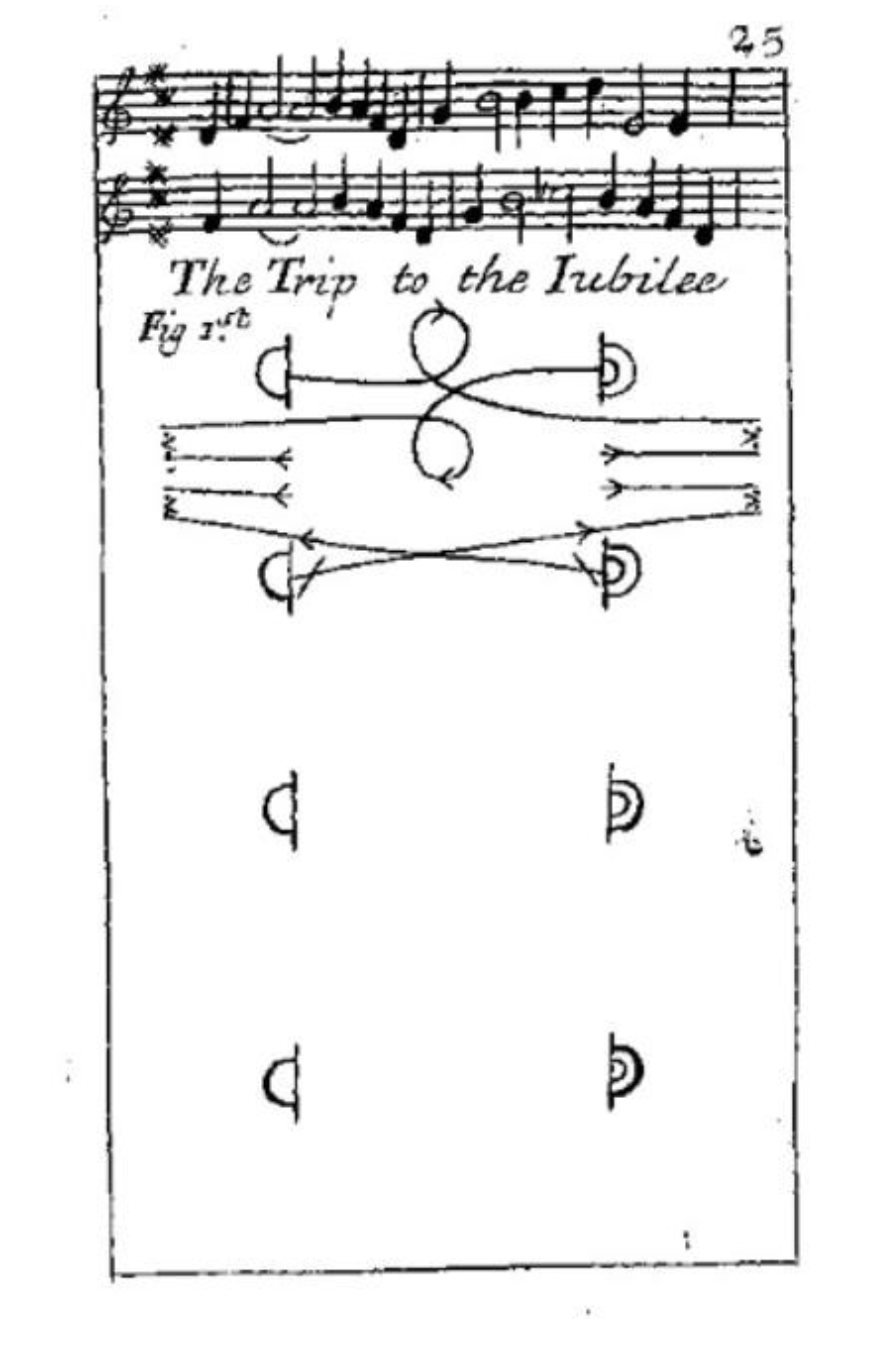
Figure 1: The first figure of The Trip to the Jubilee notation
The notation for Jubilee is divided into six figures across six pages, each of which is presented underneath approximately two bars of music. The page itself becomes the dancingstage, and the eight dancers are represented symbolically from an overhead perspective. This design portrays the geometric floor patterns the dancers create as they travel across the stage in each figure, placing significance on the dancers’ positions at each moment in the unfolding dance. For Martin, moving through choreographic dwelling places while dancing together is an integral component of producing kinetic effects: “I move to my spot. […] The space is warmed by those that enter after me and insert me into my position. The constant crossings and reformulations spark my kinetic responses21 .” I will now observe similar instances of moving through choreographic dwelling places within the notation, following Ahmed as she moves away from defining feeling, and instead seeks to track how feelings “circulate between bodies, examining how they ‘stick’ as well as move22 .” In the first figure of Jubilee, the couple at the top of the page begin to dance before the second couple. This is represented by a line that slashes against the path emerging from the second couple’s starting position, indicating that they must wait one measure of the music before beginning their phrase of the dance.
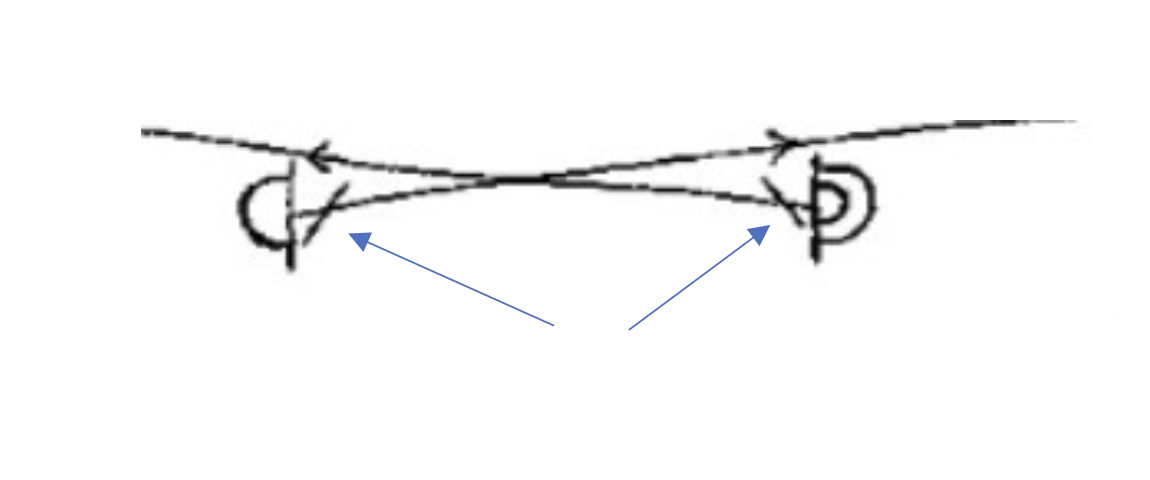
Figure 2: The diagonal strikes indicate waiting one measure
To execute the first choreographic phrase of Jubilee, the first pair of dancers move towards each other. In perceiving each other’s moving bodies, they touch without touching, through kinetic effects. As they turn beside each other, this is heightened. Adhering to the geometric pattern of the dance requires that they anticipate where their own body is pivoting towards,while continually sensing their partner’s changing location. In replacing their partners’ starting position, they enter a space that has previously held this body. Their kinetic effects overlap, forming a network of kinetic feeling.
As the dancers execute each choreographic phrase, the kinetic network constantly changes; it has its own shifting movement because it is of movement. The second couple waits in a state of kinetic anticipation before beginning their phrase of dancing. They trace a different line to the first couple; their paths directly cross, before similarly going back over their paths to finish in their partner’s starting place. Although this dancing pair do not cross paths by physically colliding, the contact of their trace requires a shared kinetic network of feeling to emerge and be drawn upon. Each of the two couples thus experiences different kinetic effects through their different movements, however the kinetic networks that they share as pairs become broader as they navigate the depiction of one geometric image. As the dance continues, the second couple replace the starting couple in their positions at the top of the page: to do so the female dancers cross over one another, as do the male dancers. This introduces a new kinetic network of feeling as dancers orient themselves in space with emphasis in relation to a different dancer than the previous choreographic phrase. Networks emerge between dancers and are replaced by other dancers, all the while belonging to an overarching network born out of a shared desire to form one scenic body. This network of kinetic feeling destabilises the experience of the individual through continuously redrawing corporeal lines to include others, and the traces of past, present, and future movement. During this destabilisation of the surface of the individual body, the notation limits this experience through its capacities to channel kinetic effects and act as a Skin-ego in localising sex difference. Essex describes the representation of the “Body of the Woman […] as that of ye man with this difference that it has a small half moon more [sic]23 .”
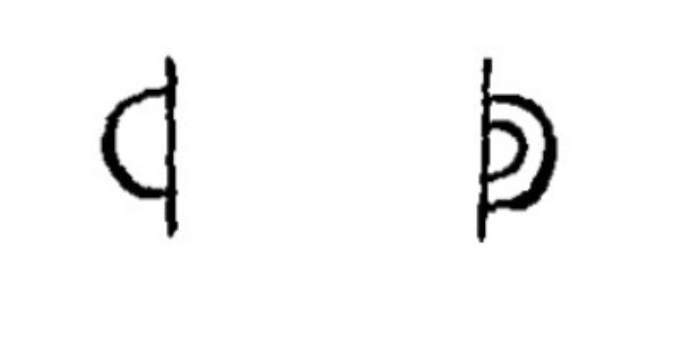
Figure 3: Left, the man's body and Right, the woman's body
Jubilee follows a pattern of order, disorder, and reorder to encompass the thinned boundary of the individual in somatic ideologies. As presented by Susan Foster: “a dance can be read as the product of choices, inherited, invented, or selected, about what kinds of bodies and subjects are being constructed24 .” Jubilee is a ballet dance fashioned on regional English country dancing. There were two main variants of this style. Dancers would begin in two lines divided by gender, and in the first variant, each gender returns to their original side of the room for their final positions. In the second style, the dancers finish having swapped sides, the female line taking the place of the original male line and vice versa. To instruct these two styles, delineating a gender binary is “constructed” by the notation system, indicating an ideology of feeling contextually wrapping the piece. Jubilee is of the first style. While the dancers move through dwelling places of gender, this transgression is ended in favour of returning to the original gendered lines. This is one example of choreography notation as having a different effect to the choreography itself. Dance performance is “an event that disappears in the very act of materializing [sic]25 .” For its duration, “by moving through instead of locating her(him)self in narrative positions, the dancer is able to step out of meaning before it becomes stabilized [sic]26 .” The style of Jubilee’s choreography means that gender can be seen as a location, as well as an attribute of a body. Contrastingly, the notation presents a depiction of Jubilee in which each part of the dance already exists, and so the meaning has already become stabilised. Returning to Foster, among the choices made by Essex on which kinds of bodies to construct in his choreography, it is clear that cis- heterosexual bodies were chosen.
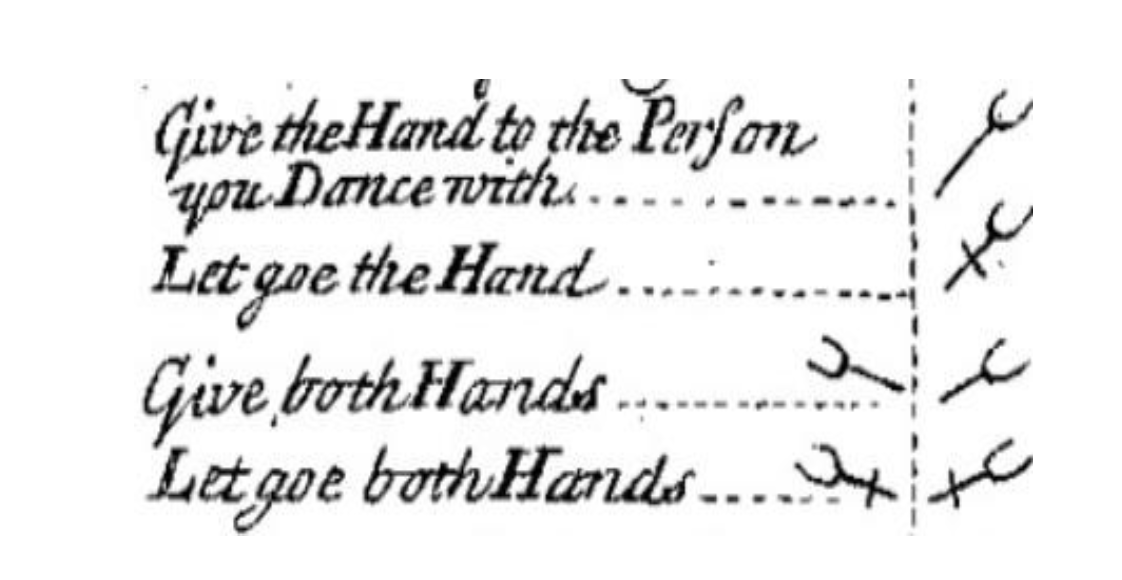
Figure 4: Essex translates the symbols for giving and letting go of the hands
With this staging of the gender binary, Jubilee reveals that it parallels the sixth function of Anzieu’s Skin-ego “as a surface on which, [..] the difference between the sexes can be recognised and this complementarity can be desired.” xxviii The dance notation enables heterosexual desire through creating a pattern of physical contact that connects and disconnects, as it instructs the dancers to “give” their hand(s) to their dance partner and “let go” of their hand(s)28 .
Figure 5: The second figure of the dance notation, which contains the above hand gestures
Contact is limited to between the body of the man and woman. Thus, while the notation facilitates a kinetic network of feeling that destabilises the experience of the individual body, it also strives to limit the connections within it to stage cis-heterosexuality. Heteronormativity and the gender binary are fundamental ideologies of British colonialism and to this day, within the ballet industry specifically, associated narratives are overwhelmingly presented despite an established array of queer composers, directors, choreographers, and dancers29 . It becomes apparent that the notation mediates the kinetic network of feeling to construct certain bodies that are synonymous with colonial civilisation. This concern is an exertion of biopower, where “sex difference stabilizes civilization30 .” The notation meets the destabilisation of the individual body with surrounding feelings of what a body can be.
The Production of the White Noble Shared Surface of a Social Body
I will now analyse how the mediation of the notation produces a new shared surface of feeling that does not seek to redraw the corporeal lines of the individual, but instead constructs an encompassing social body to which all the dancers belong as “a form inside others31 .” One crucial way in which the notation constructs a wider social body, a new surface that delineates an inside and an outside, is through its emphasis on creating geometric patterns. As discussed, to produce these patterns, the dancers must engage with a kinetic network of feeling to become an overarching scenic body. But this geometric pattern is not inert; it is inherited from balletto. Despite being labelled as an English country dance, this choreography inherits dwelling places of the body from the noble courts. In this way, the dancers restage elements of a dance style that has historically preceded them, and by doing so they take on this embodied history. Consequently, they belong to the social body that has produced and maintained this fashion of dancing.
The warmth of being embraced by a social body contains within it the threat of rejection. How then, does the notation for Jubilee distinguish between itself and foreign bodies in line with the Skin-ego? The semi-permeability of the skin, at a cellular level, is paralleled by the fourth function of the Skin-ego. Anzieu describes that through the process of barring entry to “foreign bodies” and conversely, “admission or association” with “substances that are similar or complimentary” the cell’s individuality is maintained by the cell membrane33 . The varying features of human skin, such as texture, elasticity, and colour, are far more visible than the skin of other mammals, and for Anzieu this allows us to distinguish “those whom we love and are attached to” while being able to “assert ourselves as an individual with our own personal skin34 .” He acknowledges that the process of observing these individual differences is socially mediated by positing it as “socially hypercathected”; this social mediation shall be returned to35 . For Anzieu, bodies are experienced as separate through feeling our “own personal skin”, and “in turn the Skin-ego performs the function of individuating the Self36 .” Essex’ Treatise of Chorography immediately indicates its audience by using written English. Division is narrowed further into those that are, and those that are no fluent in reading the notation for the dance it captures. Feuillet’s notation sought to create a fundamental dance vocabulary of essential movements that could not be divided any further into smaller constituent parts37 . The “rising” and “sinking” steps that are included in this basic repertoire produced strong ankles and surrounding musculature38 . Regular practise of this dance vocabulary distinguishes bodies from each other through their visible physical conditioning and fluency with the style, a phenomenon that remains within public fascination, apparent in the ubiquity of ballet-inspired workouts and recurring ballet-inspired fashion trends39 . King Louis the 14th was depicted in portraiture presenting his shapely legs and turned out feet from dancing ballet40 .

Figure 6: portrait of Louis XIV in Coronation Robes painted by the French painter Hyacinthe Rigaud in 1701
It is important to recognise that these fundamental steps remain specific to ballet; they would certainly struggle to articulate the details of gesture found in kathak, or the techniques of undulation in hula. However, they were presented as “universal actions” that could serve “as tools for analyzing any and all dances [sic]41 .” In his book, Essex used the same notation style to present English country dances alongside a fashionable French dance. The endeavour by Feuillet to identify universal movements that comprised dancing, and the importance given to translating this system by Essex, mirrored endeavours of the varied disciplines “within the Royal academies, each of which was being asked to establish the basic precepts and norms of its discipline42 .” While Jubilee may have faded into popular obscurity, the essential “sinking” and “rising” steps Essex denotes remain in the “pliés” and “relevés” of ballet class routines across the world43 . Through establishing a style of notation that claimed universality, alongside a style of dance that shaped the body in specific and measurable ways, the Feuillet notation system facilitated one of many ways in which bodies could be categorised as “foreign” and barred entry, or “similar” and attributed to part of a wider social body beyond the boundary of one’s “own personal skin44 ." Now applying the lens given by Kyla Schuller’s Biopolitics of Feeling, we can observe the ways in which this notation system, and the fluent bodies that it contains are in dialogue with unfolding ideologies of what she terms “hierarchies of somatic capacity” that served to psychologically scaffold the many violences of colonialism45 . Schuller articulates that, “the racialised body was a disabled body”, attributed the notion of being unable to balance being able to both sensitively respond to stimuli, while holding control over the body’s reactions46 . These sensitive responses to stimuli were posed as heritable lessons absorbed and reproduced by the body generation after generation47 . Through this model, “the habits of civilization were thought to impress on physicality and transmit across time as physical inheritance48 .” Via this reasoning, bodies that did not display the effects of this “physical inheritance” could be deemed both “unimpressible” and without “the habits of civilization49 .” That ballet practise was viewed as one of these “habits of civilisation” is made clear in the prefatory letter within the book, where Essex writes that “the Art of Dancing, […] is of singular use to form the manners […] of princes50 .” The Treatise of Chorography was addressed to the then Princess of Wales, viewed as appropriate material for readers of the highest social status, with Essex noting her “polite breeding51 .” In this way, feelings of recognition and otherness, warmth and contempt, or civilised and uncivilised surround and produce the boundary of the social bodies ‘us’ and ‘them’ as “emotions become attributes of collectives52 .” This further facilitates “transforming what is ‘lower’ or ‘higher’ into bodily traits” that can be discerned from the body of the individual: the shape, texture, and movement ability of one’s “own personal skin53 44 .” Many bodies would fail to meet these criteria of visible conditioning from dancing in the style encapsulated by Feuillet’s notation and distributed in English here by Essex.
As a new delineating surface of feeling that encompasses the dancing group emerges, so does a portrayal of ownership. Martin describes the development of sensation of kinetic effects during performance: “the other dancers are my kinetic field and I a part of theirs54 .” HereMartin introduces possessives to describe this kinetic field and the duality of ownership that takes place when kinetic responses make contact with each other to form a kinetic network of feeling. I shall now address issues of ownership at play in Jubilee. The dance is presented as a representation of English country dancing, with recommended steps to be used while following the instructed floor patterning. As the dancers move through these instructed floor patterns, the dancers simulate the court ballets of a hundred years previous. A further lineage is drawn in the neology of the field of choreography, a new practice that at this time had neither a stable term nor meaning. Feuillet’s ‘choreographie’, is synthesised from the Greek choreia, ‘dancing in unison’ derived from choros, ‘chorus55 ’. ‘Dancing in unison’ suggests planned movement, or a shared fluency with a movement that dancers can enter unison spontaneously; either require a shared embodied practice. This was reflected in Feuillet’s presentation of fundamental steps.
Neologising this term from ancient Greek roots creates a lineage, a physical inheritance for the 18th century developing art of noble dancing, through which court ballets could liken themselves to the chorus of Classical theatre. When translating Feuillet’s ‘choreographie’, Essex chose his own term ‘chorography’ which borrows from chorology, the close study of regional geography56 . With this term, Essex touches upon ‘choreographie’, but in pivoting to a derivative of the discipline geography, emphasises the topography of notation- placing further prominence on the geometric floor patterns of the notations in the book. This diminishes the authenticity of the regional English country dance supposedly portrayed through this notation.
The use of negative space within the notation further removes the choreography from the English country dancing that it claims to portray. This unmarked space represents the dancer’s stage, the ballroom floor, the ground. Its homogeneity facilitates dancers superimposing the choreography to their stage. This makes the distribution of this dance among the socially elite, those concerned with keeping up with the latest fashions of dancing, more accessible. This unmarked ground is linked to the process through which this book was produced; Essex’s Treatise of Chorography was made with the copperplate method58 . The copperplate artist indented the copper to create scratched channels within which ink could be placed, these indentations of ink were then forcefully transferred onto paper by the heavy printing press. This creates an orientation towards non-texture, a property shared by the fifth function of the Skin-ego: to act as the “original background” against which sensations “stand out59 .” The ground becomes a common background across all groups of dancers that stage this dance, and in so doing, erases the indigenous origins of the notated dancers. In this case, regional English country dancing is lifted from its setting. This sits alongside the construction of national dance identities that emerged alongside the more violent concerns of colonialism, with choreographers notating dance styles found across Europe and colonised regions60 . This lack of texture that represents the ground beneath the ideal version of this dance that the notation portrays, draws a parallel with the conceptualisation of Whiteness as the unraced norm61 . As a dance style predominantly performed by members of White aristocracy, this untextured background is used to represent the stage to which the White, aristocratic dancers belong to, rather than the origins of the dance itself, and its dancers. Notated dances were distributed across the colonies to English nobility62 . The dance notation therefore offers itself as a seemingly borderless way for English speaking nobility to engage with the pursuit of ballet. When considering Jubilee as a work intended to be distributed across a variety of locations, this unraced, untextured background performs as a flexible skin. This skin erases the origins of dance to create a new ground upon which the dance may be performed.
Conclusion
Dancing with others offers the opportunity to redraw corporeal lines and become part of a kinetic network of feeling; the experience of the individual can dissipate in favour of an embodied, shared feeling. But the surface of this social body holds a muscle memory of ideologies of feeling from the notation system that depicts the dance being staged. When participating in the dance breaks, I ask, who have you been dancing with? Essex’s notation for Jubilee enacts ideologies of feeling that produce a shared surface that delineates a social body of White nobility. Enacting choreography produces kinetic effects for the dancers, which register the sensation of slipstreams of each other’s moving trace. These kinetic effects form a network of kinetic feeling through which the scenic body emerges, with this process catalysed by the emphasis the notation system places on geometric floor patterns. Thinning of the boundary of the individual holds the potential for limitless embodied experience, however, the choreography of Jubilee contains this potential, restricting contact to heterosexual pairings of dancers. This new delineating surface is shaped by the context within which ballet was facilitated to circulate for White nobility across the country and the colonies. The skin-like properties of the notation act as a Skin-ego through maintaining ideologies of feeling, particularly in its capacity to recognise complimentary bodies, deny entry to perceived foreign bodies, and in its ability to present a texture-less background. Jubilee is therefore a construction of an embodied dancing identity that draws a lineage from ancient Greek theatre through the noble courts of Europe.
John Essex, For the Further Improvement of Dancing: A Treatise of Chorography (London: I:Walsh, I:Hare, and John Essex, 1715), 25-30, https://data.historicaltexts.jisc.ac.uk/view?pubId=ecco0884600600&terms=for%20the%20further%20improvement%20of%20dancing. back to text
Didier Anzieu and Naomi Segal, The Skin-Ego: A New Translation by Naomi Segal (Karnac Books, 2016), https://eds.p.ebscohost.com/eds/ebookviewer/ebook/ZTAwMHh3d19fMTIxTY2OV9fQU41?sid back to text
Sarah Ahmed, "Introduction: Feel Your Way," in The Cultural Politics of Emotion (Routledge, 2013), 10-28; Randy Martin, "Dance as a Social Movement," Social Text, no. 12 (1985), https://doi.org/10.2307/466604.; Susan Foster, Choreographing Empathy: Kinesthesia in Performance (Taylor & Francis Group, 2010), https://ebookcentral.proquest.com/lib/uea/reader.action?docID=667850. back to text
John Essex, For the Further Improvement of Dancing: A Treatise of Chorography (London: I:Walsh, I:Hare, and John Essex, 1715), https://data.historicaltexts.jisc.ac.uk/view?pubId=ecco-0884600600&terms=for%20the%20further%20improvement%20of%20dancing. back to text
Alexander Bland, A History of Ballet and Dance in the Western World (London: Barrie & Jenkins, 1976), 37. back to text
Bland, A History of Ballet and Dance in the Western World, 43. back to text
Royal Opera House, "Romeo and Juliet – Dance of the Knights (The Royal Ballet)," YouTube, June 18, 2019, video, 1:48, https://www.youtube.com/watch?v=SyDo3h1Tu7c back to text
Bland, A History of Ballet and Dance in the Western World, 43. back to text
9. Ibid. back to text
Foster, Choreographing Empathy: Kinesthesia in Performance, 18. back to text
Raoul Auger Feuillet, Chorégraphie, ou l'art de décrire la dance (Paris: Michel Brunet of Mercure Galant, 1700). back to text
Foster, Choreographing Empathy: Kinesthesia in Performance, 28; Essex, For the Further Improvement of Dancing: A Treatise of Chorography, 25-30. back to text
13. Essex, For the Further Improvement of Dancing: A Treatise of Chorography, Title Page. back to text
Janelle Monáe, "Janelle Monáe – Make Me Feel [Official Music Video]," YouTube, February 22, 2018, video, https://www.youtube.com/watch?v=tGRzz0oqgUE. back to text
Sarah Ahmed, "Introduction: Feel Your Way," 11. back to text
16. Ibid. back to text
Martin, "Dance as a Social Movement," 69. back to text
Martin, "Dance as a Social Movement," 55. back to text
Ahmed, "Introduction: Feel Your Way," 4. back to text
Madonna, "Madonna - Into The Groove (Official Video)," YouTube, August 15, 2013, video, https://www.youtube.com/watch?v=52iW3lcpK5M. back to text
Martin, "Dance as a Social Movement," 69. back to text
Ahmed, "Introduction: Feel Your Way," 4. back to text
Essex, For the Further Improvement of Dancing: A Treatise of Chorography, 2. back to text
Foster, Choreographing Empathy: Kinesthesia in Performance, 4. back to text
Marcia B. Siegel, At the Vanishing Point: A Critic Looks at Dance (New York: Saturday Review Press, 1972), 1. back to text
Ann Cooper Albright, Choreographing Difference: The Body and Identity in Contemporary Dance ([Middletown, Conn.]: Wesleyan University Press, 1997), 97, https://webpebscohostcom.uea.idm.oclc.org/ehost/ebookviewer/ebook/ZTAwMHh3d19fMzY2NTg4X19BTg2?sid=93cd6e56-dc89-4922-9b6462a5af3009c3@redis&vid=0&format=EB&rid=1. back to text
Avril Lavigne VEVO, "Avril Lavigne - Sk8er Boi (Official Video)," YouTube, March 10, 2010, video, https://www.youtube.com/watch?v=TIy3n2b7V9k. back to text
Anzieu and Segal, The Skin-Ego: A New Translation by Naomi Segal, 112. back to text
Avichai Scher, "Homophobia, Misogyny Still Problematic in World of Dance, Performers Say," NBC News, September 21, 2019, https://www.nbcnews.com/feature/nbc-out/homophobia-misogyny-still-problematic-world-dance-performers-say-n1057186.; Lauren Warnicke, “For Queer Women in Ballet, There's a Profound Gap in Representation. These Dancers Hope to Change That.,” Pointe Magazine, August 30, 2021, https://pointemagazine.com/queer-women-in-ballet/.; Emily Dixon, "The #QueertheBallet Movement: 'It's More Than a Man Lifting a Woman in a Tutu'," the Guardian, February 10, 2021, https://www.theguardian.com/stage/2021/feb/10/ballet-queer-dancers-redefining-an-art-form-adriana-pierce. back to text
Kyla Schuller, The Biopolitics of FeelingRace, Sex, and Science in the Nineteenth Century (Duke University Press, 2018), 16, https://doi.org/10.1215/9780822372356. back to text
Martin, "Dance as a Social Movement," 69. back to text
Coconut Music Germany, "Haddaway - What Is Love [Official]," YouTube, June18, 2014, video, https://www.youtube.com/watch?v=HEXWRTEbj1I. back to text
Anzieu and Segal, The Skin-Ego: A New Translation by Naomi Segal, 111. back to text
34. Ibid back to text
35. Ibid back to text
36. Ibid. back to text
Foster, Choreographing Empathy: Kinesthesia in Performance, 23. back to text
Alberta Ballet School, "What Muscles Does Ballet Strengthen? - Alberta Ballet School - Blog," Alberta Ballet School - Blog, accessed June 15, 2023, https://blog.albertaballetschool.com/what-muscles-does-balletstrengthen/#:~:text=Ballet%20dancers%20strengthen%20the%20musces,using%20the%20floor%20a s%20resistance. back to text
Mary Helen Bowers, "Ballet Beautiful ballet-inspired fitness method and lifestyle brand," Ballet Beautiful ballet-inspired fitness method and lifestyle brand, accessed June 15, 2023, https://www.balletbeautiful.com/.; Emma Newham, "Home - Barre Concept," Barre Concept, accessed June 15, 2023, https://barreconcept.co.uk/.; Laird Borrelli-Persson, "Balletcore: A Look Back at How Designers Have Been Inspired by Dance," British Vogue, November 25, 2022, https://www.vogue.co.uk/fashion/article/balletcore-trend-fashion-dance back to text
Hyacinthe Rigaud, “Portrait of Louis XIV (the J. Paul Getty Museum Collection),” Getty, accessed August 31, 2025, https://www.getty.edu/art/collection/object/103RA8. back to text
Foster, Choreographing Empathy: Kinesthesia in Performance, 23. back to text
42. Ibid back to text
Foster, Choreographing Empathy: Kinesthesia in Performance, 43. back to text
Anzieu and Segal, The Skin-Ego: A New Translation by Naomi Segal, 111. back to text
Schuller, The Biopolitics of FeelingRace, Sex, and Science in the Nineteenth Century, 12. back to text
Schuller, The Biopolitics of FeelingRace, Sex, and Science in the Nineteenth Century, 13. back to text
Schuller, The Biopolitics of FeelingRace, Sex, and Science in the Nineteenth Century, 7. back to text
48. Ibid. back to text
Schuller, The Biopolitics of FeelingRace, Sex, and Science in the Nineteenth Century, 13. back to text
Essex, For the Further Improvement of Dancing: A Treatise of Chorography, prefatory letter. back to text
51. Ibid. back to text
Ahmed, "Introduction: Feel Your Way," 2. back to text
Ahmed, "Introduction: Feel Your Way," 4. back to text
Martin, "Dance as a Social Movement," 69. back to text
Foster, Choreographing Empathy: Kinesthesia in Performance, 17. back to text
56. Ibid. back to text
Daft Punk VEVO, "Daft Punk - Lose Yourself to Dance (Official Version)," YouTube, September 16, 2013, video, https://www.youtube.com/watch?v=NF-kLy44Hls. back to text
University of Adelaide, "Copperplate Engravings | Rare Books & Manuscripts," The University of Adelaide, accessed June 15, 2023, https://www.adelaide.edu.au/library/special/exhibitions/history-of-bookillustration/copperplate-engravings/. back to text
Anzieu and Segal, The Skin-Ego: A New Translation by Naomi Segal, 112. back to text
Foster, Choreographing Empathy: Kinesthesia in Performance, 32. back to text
Stephen Brookfield, "Uncovering and Challenging White Supremacy," in Educating for Critical Consciousness (New York, NY : Routledge, 2019.: Routledge, 2019), 14, https://doi.org/10.4324/9780429431654-2. back to text
Foster, Choreographing Empathy: Kinesthesia in Performance, 32. back to text
Works Cited
Ahmed, Sarah. "Introduction: Feel Your Way." In The Cultural Politics of Emotion, 9–27. Routledge, 2013. https://doi.org/10.4324/9780203700372-6.
Alberta Ballet School. "What Muscles Does Ballet Strengthen? - Alberta Ballet School - Blog." Alberta Ballet School - Blog. Accessed June 15, 2023. https://blog.albertaballetschool.com/what-muscles-does-ballet-strengthen/#:~:text=Ballet%20dancers%20strengthen%20the%20muscles,using%20the%20floor%20as%20resistance.
Albright, Ann Cooper. Choreographing Difference: The Body and Identity in Contemporary Dance. [Middletown, Conn.]: Wesleyan University Press, 1997. https://web-p-ebscohost-com.uea.idm.oclc.org/ehost/ebookviewer/ebook/ZTAwMHh3d19fMzY2NTg4X19BTg2?sid=93cd6e56-dc89-4922-9b64-62a5af3009c3@redis&vid=0&format=EB&rid=1.
Anzieu, Didier, and Naomi Segal. The Skin-Ego: A New Translation by Naomi Segal. Karnac Books, 2016. https://eds.p.ebscohost.com/eds/ebookviewer/ebook/ZTAwMHh3d19fMTIxNTY2OV9fQU41?sid=26189b69-3a14-477b-aba5-6f974d5a9132@redis&vid=2&format=EB&lpid=lp_73&rid=0.
Avril Lavigne VEVO. "Avril Lavigne - Sk8er Boi (Official Video)." YouTube, March 10, 2010. Video, 3:38. https://www.youtube.com/watch?v=TIy3n2b7V9k.
Bland, Alexander. A History of Ballet and Dance in the Western World. London: Barrie & Jenkins, 1976.
Borrelli-Persson, Laird. "Balletcore: A Look Back at How Designers Have Been Inspired by Dance." British Vogue, November 25, 2022. https://www.vogue.co.uk/fashion/article/balletcore-trend-fashion-dance.
Bowers, Mary Helen. "Ballet Beautiful Ballet-Inspired Fitness Method and Lifestyle Brand." Ballet Beautiful ballet-inspired fitness method and lifestyle brand. Accessed June 15, 2023. https://www.balletbeautiful.com/.Brookfield, Stephen. "Uncovering and Challenging White Supremacy." In Educating for Critical Consciousness, 11–27. New York, NY : Routledge, 2019.: Routledge, 2019.https://doi.org/10.4324/9780429431654-2.
Coconut Music Germany. "Haddaway - What Is Love [Official]." YouTube, June 18, 2014. Video, 4:00. https://www.youtube.com/watch?v=HEXWRTEbj1I.
Daft Punk VEVO. "Daft Punk - Lose Yourself to Dance (Official Version)." YouTube, September 16, 2013. Video, 4:10. https://www.youtube.com/watch?v=NF-kLy44Hls.
Dixon, Emily. "The #QueertheBallet Movement: 'It's More Than a Man Lifting a Woman in a Tutu'." the Guardian, February 10, 2021. https://www.theguardian.com/stage/2021/feb/10/ballet-queer-dancers-redefining-an-art-form-adriana-pierce.
Essex, John. For the Further Improvement of Dancing: A Treatise of Chorography. London: Sold by I:Walsh, I:Hare, and John Essex, 1715. https://data.historicaltexts.jisc.ac.uk/view?pubId=ecco0884600600&terms=for%20the%20further%20improvement%20of%20dancing.
Feuillet, Raoul Auger. Chorégraphie, ou l'art de décrire la dance. Paris: Michel Brunet of Mercure Galant, 1700.
Foster, Susan. Choreographing Empathy: Kinesthesia in Performance. Taylor & Francis Group, 2010. https://ebookcentral.proquest.com/lib/uea/reader.action?docID=667850.
Janelle Monáe. "Janelle Monáe – Make Me Feel [Official Music Video]."YouTube, February 22, 2018. Video, 3:50. https://www.youtube.com/watch?v=tGRzz0oqgUE.
Madonna. "Madonna - Into The Groove (Official Video)." YouTube, August 15, 2013. Video, 3:51. https://www.youtube.com/watch?v=52iW3lcpK5M.
Martin, Randy. "Dance as a Social Movement." Social Text, no. 12 (1985): 54. https://doi.org/10.2307/466604.
Newham, Emma. "Home - Barre Concept." Barre Concept. Accessed June 15, 2023. https://barreconcept.co.uk/.
Rigaud, Hyacinthe. “Portrait of Louis XIV (the J. Paul Getty Museum Collection).” Getty. Accessed August 31, 2025. https://www.getty.edu/art/collection/object/103RA8.
Royal Opera House. "Romeo and Juliet – Dance of the Knights (The Royal Ballet)." YouTube, June 18, 2019. Video,1:49. https://www.youtube.com/watch?v=SyDo3h1Tu7c.
Scher, Avichai. "Homophobia, Misogyny Still Problematic in World of Dance, Performers Say." NBC News, September 21, 2019. https://www.nbcnews.com/feature/nbc-out/homophobia-misogyny-still-problematic-world-dance-performers-say-n1057186.
Schuller, Kyla. The Biopolitics of Feeling Race, Sex, and Science in the Nineteenth Century. Duke University Press, 2018. https://doi.org/10.1215/9780822372356.
Siegel, Marcia B. At the Vanishing Point: A Critic Looks at Dance. New York: Saturday Review Press, 1972.
University of Adelaide. "Copperplate Engravings | Rare Books & Manuscripts." The University of Adelaide. Accessed June 15, 2023. https://www.adelaide.edu.au/library/special/exhibitions/history-of-book-illustration/copperplate-engravings/.
Warnicke, Lauren. "For Queer Women in Ballet, There's a Profound Gap in Representation.These Dancers Hope to Change That." Pointe Magazine. Accessed June 15, 2023. https://pointemagazine.com/queer-women-in-ballet.
Yancy, George, ed. Educating for Critical Consciousness. New York, NY: Routledge, 2019. https://doi.org/10.4324/9780429431654.